About the author
Historical Retrospectives
Draymond Green Ruined Small Ball, OKC and the Third Guard Brought It Back
.png)
Draymond Green Ruined Small Ball, OKC and the Third Guard Brought It Back
A lot of NBA discourse revolves around how to build teams in terms of combinations of player archetypes. But much like the league itself for five years, this conversation has largely been ruined by the mid-2010s Golden State Warriors. In particular, Draymond Green’s one-of-one skillset enabled the famous and vaunted “Death Lineup” — where Green would play center in a grouping that would come to define what “small ball” meant in the NBA going forward — much to the detriment of the teams to follow.
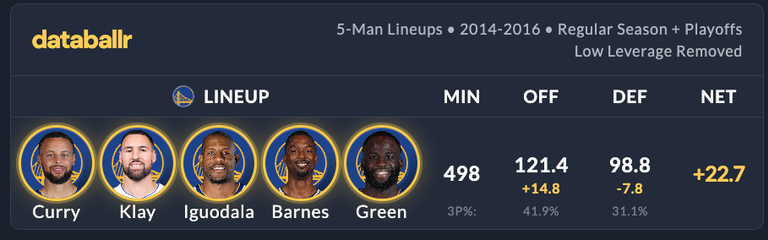
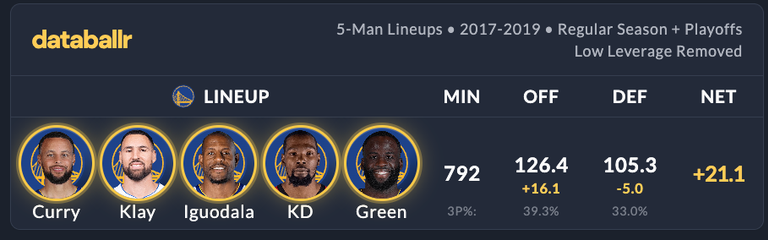
What spawned from this was an obsession with stretch bigs and wings that could be passable playing “up” a position (a 4 that can play the 5, a 3 that can play the 4, etc.) in the amorphous name of, among other things, spacing. What’s lost from these cheap imitations is the real advantage of small ball and why Draymond was the ultimate skeleton key when it came to unlocking those advantages in a way that cannot be recreated.
The real value of going small is not the spacing that it creates, rather, it's the amount of dribble, pass, shoot that can be put on the court at once. “Dribble, pass, shoot” is the colloquial term for players that possess every skill that a team would want from a perimeter player offensively. This versatile skillset is often inversely correlated with height, leading to the aptly named “small” ball, but the roster makeup of the first team to popularize this strategy caused the true purpose of small ball to be misconstrued for the better part of a decade.
I don’t think it’s outlandish to say that Draymond Green is the most unique player to ever play basketball. His combination of defensive versatility, playmaking ability, and IQ is unparalleled in league history. This skill intersection made him the fulcrum of those dominant Golden State teams, allowing Coach Kerr to play him at center and slot more offensive skill into the lineup without losing much/any rim protection or offensive paint production (largely through his interior passing rather than interior finishing, but the result is the same).
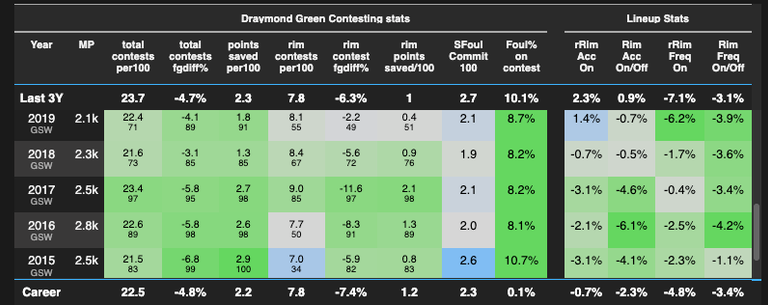
This is where the rest of the league went wrong. Other teams saw the Death Lineup and tried to recreate the smaller frontcourt and Draymond’s lineup impact, rather than seeing it for what it was: an optimization of Golden State’s particular roster construction allowing for the most perimeter skill to play on the court together as possible without sacrificing traditional big man contributions.
The issue with that response is clear — the teams that didn’t employ Draymond lost too much interior defense, rebounding, and finishing to justify the tradeoff of playing a small ball or stretch big. The league copied the solution Draymond provided, and the archetype Draymond filled, instead of diagnosing the problem he was solving. For everyone else, there needed to be another way to maximize the amount of dribble/pass/shoot on the court at once without sacrificing too many interior skills and responsibilities. Instead of making the center position smaller in size, teams should be making their backcourt bigger in number.
Packing the (Back)court
Every team wants players that can pass, dribble, and shoot, but those skills aren't evenly distributed across the five positions. Traditional roster construction principles dictate that teams play with a point guard, a shooting guard, two forwards, and a center. Where this lineup construction leaves more to be desired is that, with the exception of the very elite, every non-point guard represents an offensive compromise, in one direction or another.
Centers and most power forwards provide interior size, rebounding, and rim protection, but very few possess the ball skills necessary to consistently create offense on the perimeter. Wings occupy the other end of the spectrum. They’re typically expected to space the floor, defend multiple positions and attack obvious advantages, but only the very best playmaking wings (namely, LeBron James) approach the level of a point guard in that respect.
Shooting guards, meanwhile, are the awkward tweeners. They’re a compromise between two other positions, possessing less than the required amount of point guard skills while also being without the full physical profile of a wing. And oftentimes, four quarters doesn’t equal a dollar and teams are left giving an outsized role to a player that has a bunch of good, but replaceable traits, and no truly transformative skills.[1]
This well-timed pair of tweets sums up the shooting guard thesis pretty well:
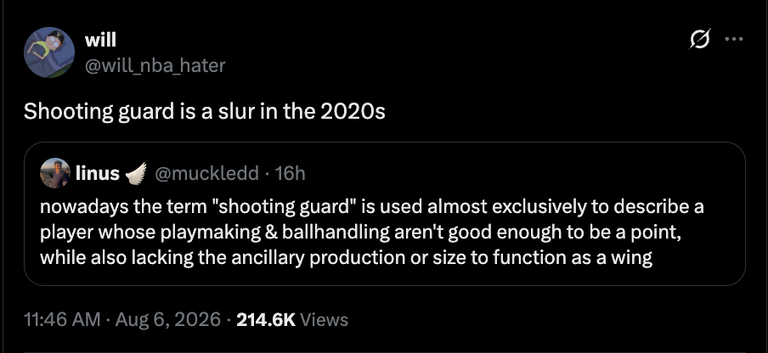
Returning to the small ball discussion: these limitations make typical shooting guards inadequate as dribble, pass, shoot maximizers, as they possess neither the complete package of offensive skills nor the defensive capabilities to cover for the offensive talent. Rather, the necessary lineup construction requires the highest concentration of point guards as possible. They’re most always the league’s best ballhandlers and passers, while also being among the most proficient shooters in the aggregate. All else equal, no position concentrates more dribble/pass/shoot skill than point guard.
I’ll discuss the specific, data-driven advantages that three point guard lineups possess in a few paragraphs from here, but there’s an important, 10,000 foot overarching thesis that encapsulates the benefit of these lineups: three point guard lineups create unparalleled levels of versatility and act as weak link destroyers. Last year, Owen Phillips posted a great article about a macro-level change taking place across the NBA: winning is no longer just a product of the quality of a team’s best player or players, it’s now also about minimizing how detrimental your worst player is.
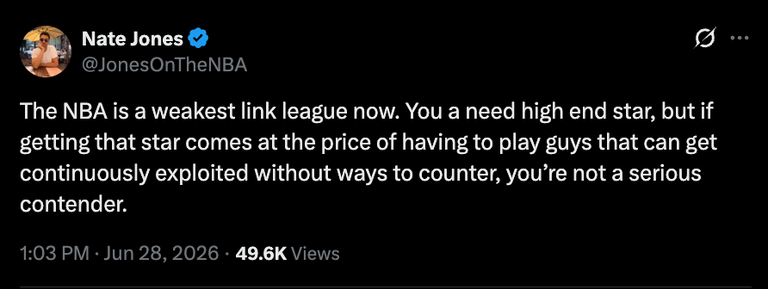
While I’m not fully bought into that premise as a teambuilding strategy, it’s an interesting background to discuss the merits of three point guard lineups. With three point guards that can initiate offense and create advantages for themselves and others, there’s no hiding. The opposing team can't mask defensive weaknesses — any and all possibly advantageous threads can be pulled. Three point guard lineups are resilient, able to initiate offense through three players — or more importantly — involve any of the three opposing perimeter defenders in any and every action.
Up until this point, three point guard lineups have been underutilized among NBA teams, but the results, particularly in comparison to the “traditional” zero center small ball units, have been quite positive. Since 2015-16 (the year of the Death Lineup’s true breakout), lineups that featured three point guards outperformed those teams’ baseline lineups by almost three points per 100 possessions. Conversely, small ball lineups underperformed all other lineups to a not-insignificant degree.[2]
The interesting part isn’t just that three point guard lineups outperform both their baseline and small ball counterparts, it’s about how they do it.
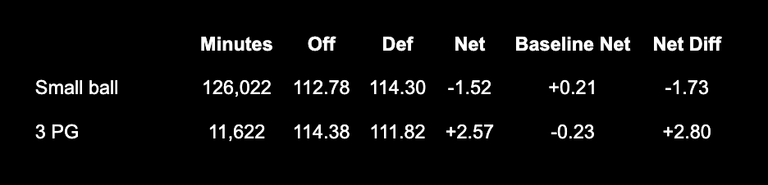
Three PG lineups feature a lot of the advantages over baseline lineups that you’d expect: more three pointers, less turnovers, more steals etc. But what’s surprising is that those lineups also outperform bigger lineups in areas typically associated with size. Offensively, three point guard lineups shot a better percentage from inside the arc while, counterintuitively, having less assists than the baseline lineups. To me, this is attributable to the aforementioned creation gap between point guards and their bigger teammates. In this sense, playing point guard is less about being a better passer than the rest of their teammates and more about being a better offensive player – exploiting individual mismatches on the perimeter and creating efficient offense with less reliance on external structure and ball movement. These advantages are only aided by the spacing created by the presence of other skilled point guards on the perimeter.
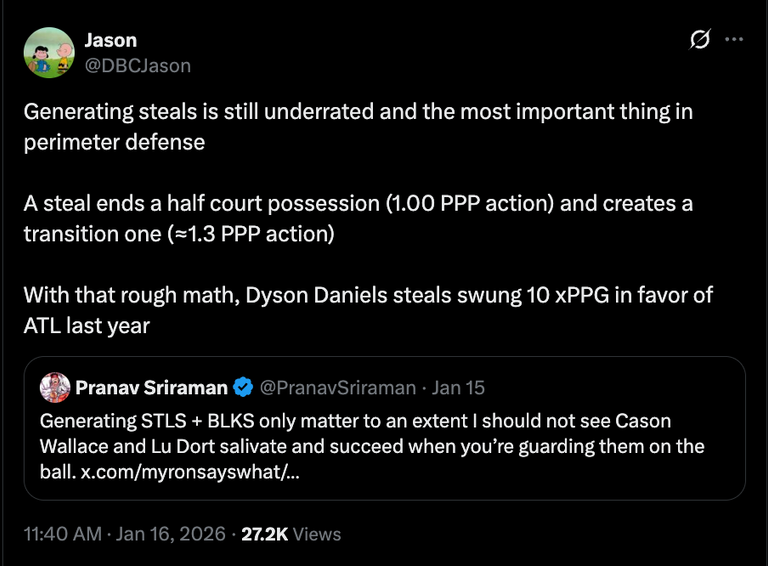
Counter to what many may intuituvely believe, these lineups were also 1.5 points per 100 possessions better on defense. I've previously posited that steal generation is underrated, and often over-hated, in player analysis. This idea plays a central part in the defensive value of three point guard lineups. On average, point guards generate more steals than any other position, ending possessions early and spurring early offense. On the other side of that same coin, point guards are also the best turnover limiters, keeping opponents from having high EV fastbreak possessions and suppressing overall defensive rating. Outside of the steal gap, there are likely ball pressure, screen navigation, and general basketball IQ components at play allowing three point guard lineups to survive, and even improve, defensively in the face of size limitations.
The Third Guard
The aggregate success of three point guard lineups begs the question: why don’t more teams utilize them? The answer lies in the fact that, within these lineups, there’s a required archetype of player, akin to the “small ball 5”, that makes this lineup composition feasible. In successful three point guard lineups, there’s one point guard that I’m dubbing the “Third Guard,” whose ability to replicate enough wing responsibilities serves as the linchpin that unlocks real small ball. The Third Guard's job is much more than simply being a bigger point guard. Rather, they eliminate as many of the traditional costs of playing another point guard as possible. All three-point guard lineups give up something by replacing a wing with another ballhandler, but a Third Guard exists to erase enough of those costs that the offensive value of adding another dribble/pass/shoot player outweighs those losses.
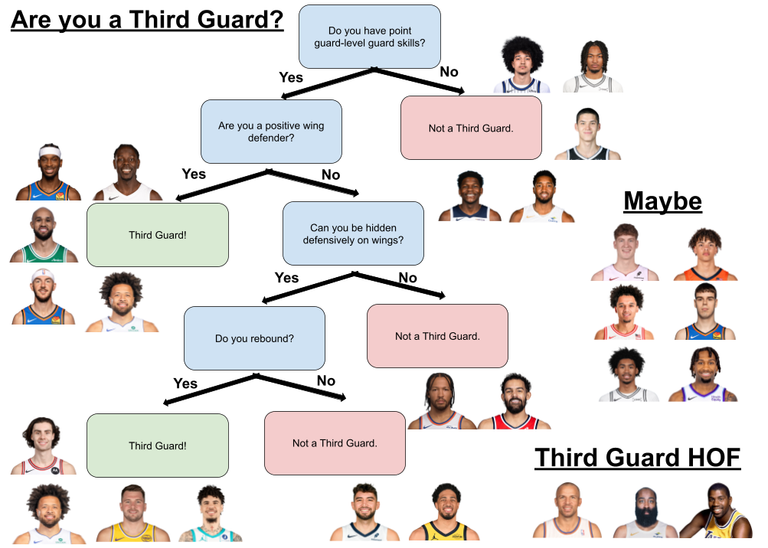
I see two paths to success as a Third Guard: a path for good defenders and a path for “bad” defenders. The good defender path is simple: be able to have success guarding wings or forwards. If a point guard can credibly defend wings, survive switches onto bigger players, and avoid requiring constant help, then that lineup loses very little defensively by replacing a traditional wing with another guard. In that case, the additional dribble/pass/shoot ability becomes almost pure surplus value. The formula for this path is simple: guard on offense + wing on defense = best of both worlds.
For the more defensively challenged, there’s a different set of prerequisites. Here, the first step is a similar, but lesser one to the prior path: simply being big enough to be “hidden” on the opposing team’s worst wing player. Where the first (and only) step for good defenders was a totality-of-the-circumstances analysis of defensive capabilities, the ability to hide a “bad” defender is largely a size and strength proposition. Having the physical profile to survive guarding “up” a position, even if that player cannot excel on those forwards, is an intuitive requirement. But if the Third Guard isn’t able to provide positive or even neutral value as a wing defender, they must be able to help out in another area of the game in order to make the trade-off worth it. That additional area is rebounding. Ending opponent possessions early with a rebound from the point guard, leading directly to quick transitions into early offense and easy points is a hallmark of bad defender Third Guards like LaMelo Ball and Josh Giddey.
More broadly, this “bad defender” path illustrates the underlying key to finding and using Third Guards. Third Guards won’t be able to replicate every aspect of a wing's game, but they don't need to — they only need to replace enough wing skills that the added offensive skill becomes a net positive. Whether that comes through defense, rebounding, or another physical advantage is less important than the end result.
It’s worth noting that there’s an implicit step zero for both pathways: the potential Third Guard must indeed be a guard with point guard-level skills. It might go without saying, but without point guard-level dribble/pass/shoot ability, there is no three point guard lineup and all of the aforementioned benefits of the Third Guard go out the window. This distinction is important because being Third Guard is much more about function than it is measurements. A 6'6 point guard is not automatically a Third Guard any more than a 6'6 forward is Draymond Green. The role is defined by what that player allows the rest of the lineup to become. Third Guards, like Draymond, are the sine qua non of maximizing team skill.
Based on the foregoing, I made this flow chart to help visualize who is and who isn’t a Third Guard:
With that in mind, here are the five teams that I think have the most potential for impactful three point guard lineups this upcoming season, with a few honorable mentions.
HM. Phoenix Suns, Boston Celtics, Minnesota Timberwolves
Last year, the Phoenix Suns were the only team that ran over 100 minutes of a single three point guard lineup (under the strict Basketball Reference definition of point guard). For all the player personnel decisions they’ve been criticized for, the Suns have been able to cobble together a really solid group of unheralded point guards, including potential Third Guard Jordan Goodwin. Allocation of talent and money means this group won’t see a significant amount of playing time together, but this trio deserves a mention and a deeper look into how the team is dividing up its resources.
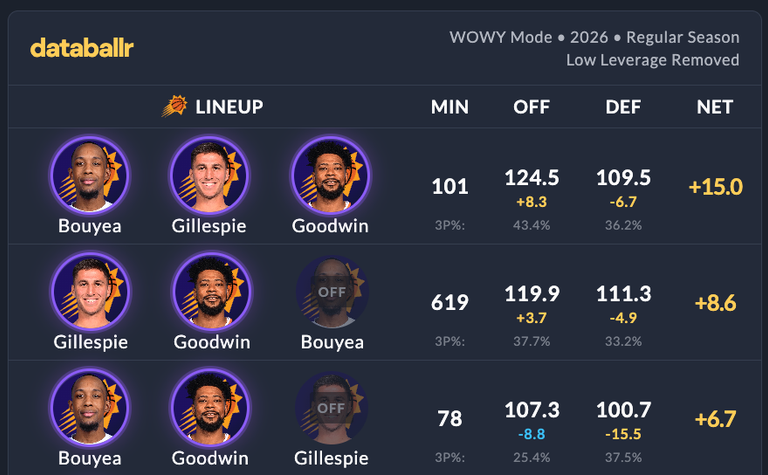
The Celtics and Timberwolves have Derrick White and LaMelo Ball as Third Guards, but without the requisite number of viable point guards they won’t be able to maximize their Third Guard’s unique skillset. Two teams to look out for going forward if roster constructions change.
HM: San Antonio Spurs and Brooklyn Nets
This group of honorable mentions has the required abundance of point guards. Here, the question is about the Third Guard’s skillset.
Since Billy Donovan joined the Bulls, they’ve ranked second in total minutes played with three point guards on the court at once. Before that, in his final season with the Thunder, he oversaw both the beginning of Oklahoma City's decade-long infatuation with three point guard lineups and one of the earliest successful implementations of the concept. Donovan is now with the Spurs as an assistant coach. To an optimist, this Spurs roster is a prime candidate to buy into Third Guard usage.
This past season, De’Aaron Fox, Dylan Harper, and Stephon Castle only played 20 non-low leverage minutes together, but as three of the team’s four best players, it’s natural to believe the team will tap more into that grouping’s talent. Whether or not the team actually plays those three together more is irrelevant… the real issue — and what only makes them an honorable mention — is that Stephon Castle is ostensibly a wing. Even without diving into the finer nuance, a career 30% three point shooter who turns the ball over at a rate on par with anyone else in the league cannot qualify as the type of dribble/pass/shoot threat required to maximize three point guard lineups. In a hypothetical world, Dylan Harper has the potential to fill in as a Third Guard, and Victor Wembanyama is the ultimate big to paper over any resulting cracks, but their current roster construction isn't yet capable of supporting three point guard lineups without Castle.
I have similar trepidations about Egor Demin and the Brooklyn Nets. Brooklyn famously selected four guards in the first round of the 2025 draft before doubling down with Mikel Brown in 2026. With that much investment in the point guard position, it’d be a natural progression to fit as many of those young players onto the court as possible. But their treatment of their highest profile draft pick, and the only one that profiles as a potential Third Guard, makes me skeptical of their ability to pull off this construction in practice.
6’8 Egor Demin was highly lauded after his rookie year, but I came away disappointed — more so in the Nets' treatment of Demin than his actual performance. A great passer who made significant strides as a shooter over the course of his rookie year, Demin is one of the few potential Third Guards who is held back almost entirely by the "dribble" portion of dribble/pass/shoot. More specifically, Demin’s handle, or lack thereof, neuters his passing and limits his scoring upside on the ball. To me, the best way to overcome such a deficiency is to get as many on-ball reps as possible to work through the kinks. The Nets, however, took Demin off the ball to make him a more viable rotation option immediately, instead sacrificing his long-term development as a point guard, and by extension, a Third Guard.
5. Detroit Pistons
If you look closely enough at the Third Guard flow chart, you’ll notice that one player appears twice. That’s because Cade Cunningham is the only player in the league that qualifies as a Third Guard by both the good and bad defender paths. As the most versatile Third Guard in the league, you’d think Cunningham’s team would rank higher on this list, but the Pistons’ roster is explicitly built upon the exact opposite philosophical foundations of the Third Guard. Detroit’s return to relevancy has largely come from buying into size and defense, relying on Cunningham to provide enough pass/dribble/shoot skill to make up for the rest of the roster’s inadequacies.
Despite this, the Pistons struck gold twice, finding a serviceable point guard off the street and then another in the late first round. The additions of Daniss Jenkins and Ebuka Okorie give Detroit the optionality to diverge from the wing-centric lineups that have served as both the team’s biggest strength and Achilles heel over the past two years. But given the amount of capital invested into the wing and big positions, three point guard lineups will only be able to serve as a curveball to the team’s typical bread and butter (which explains their low ranking on this list), but any team that’s not at least trying to take advantage of Cade Cunningham’s one-of-one skillset isn’t trying hard enough.
4. Memphis Grizzlies
Okay, I’ll fully admit: this one is cheating. The Grizzlies don’t have a Third Guard, but I have such an optimistic/delusional belief that their frontcourt is so uniquely talented that they’ll be able to circumvent parts of the above flow chart and find three point guard success without a bona fide Third Guard.
In his limited sample last year, Zach Edey was arguably the best offensive rebounder and rim deterrent in the league. Cameron Boozer further augments that rimfluence as one of the most dominant offensive paint prospects in recent memory. That pairing should need no help in the paint on either end, thereby eliminating the final prerequisite for the “bad defender” Third Guard path. If I’m right, this would mean all that’s required for the Grizzlies to pull off three PG lineups is a pseudo Third Guard that has the frame to be hidden on wing players defensively. Enter: Ty Jerome. 6’5 with just enough mass and just enough heart to survive on the opposing team’s third biggest player. If the ultra-talented Boozer/Edey frontcourt is what I think it is, the Grizzlies should have the opportunity to fill the rest of their lineup with as much skill as possible, making Jerome a functioning Third Guard that unlocks all three point guard lineups generally.
3. Portland Trail Blazers
The Ja Morant trade to Portland sparked my interest in diving deeper into three point guard lineups. More specifically, the return package for Ja Morant not including Jrue Holiday is what sent me down this rabbit hole. Unlike a number of the lower-ranked or honorable mention teams, Portland has no shortage of point guards. More importantly, those point guards account for a significant portion of both the team's salary cap and its talent equity, making the Blazers one of the teams most incentivized to lean into three point guard lineups.
With two of Ja Morant, Damian Lillard and Scoot Henderson joining Jrue Holiday as the Third Guard, there's no doubt the Blazers would field the highest-profile — and likely highest-paid — three point guard lineups in basketball. The bigger question is whether those stars are scalable enough for the concept to reach its ceiling. Both Morant and Lillard have traditionally generated the majority of their value with the ball in their hands, making it difficult to envision either ceding on-ball reps to the other. Particularly, Morant has shown little ability to provide spacing or any offensive value off the ball, while neither he nor Lillard projects as a player capable of replacing any wing value defensively. Those limitations likely place a ceiling on how often the Morant-Lillard-Holiday trio can share the floor.
That said, Portland appears committed to giving multi-point guard lineups a genuine opportunity. If either Morant or Lillard are willing to sacrifice and/or evolve to take on a more scalable role (or Scoot Henderson is able to take a significant step in his development), the Blazers have the personnel to become one of the most difficult offenses in basketball to defend, as no other team possesses this much point guard talent.

2. Milwaukee Bucks
This offseason was arguably the most pivotal in Bucks franchise history — their front office had the chance to choose a direction for the post-Giannis era, and what they chose was to acquire three high-profile guards to pair with an already promising backcourt. Both Brayden Burries, via the good defender path, and Kasparas Jakucionis, via the bad defender path, have the potential to blossom into Third Guards alongside rising star Ryan Rollins, Tyler Herro, and Kevin Porter Jr.
The most important part of the equation in Milwaukee is that no team has more to gain, or less to lose, from experimenting than the Bucks. Successfully emerging from a rebuild requires finding paths to asymmetric upside, and fully embracing three point guard lineups is exactly the kind of low-cost, high-upside bet a rebuilding team should be making. The Bucks' highest-equity players are guards, while their wing depth is among the worst in the league. Instead of sticking to conventional lineup construction with an unconventional roster, the Bucks could lean into a heavy dose of three point guard lineups as its best path back to relevance.
1. Oklahoma City Thunder
Much to no one’s surprise, the Oklahoma City Thunder are ahead of the rest of the league — the Thunder have leaned into guard-concentrated lineups for the entirety of the 2020s. What started with Chris Paul/Dennis Schroeder/SGA — a team that massively overperformed expectations and took the James Harden Rockets to 7 games in the Bubble — evolved into a dynasty built off the best guard depth in the NBA, with an outsized emphasis on finding as many Third Guards as possible.
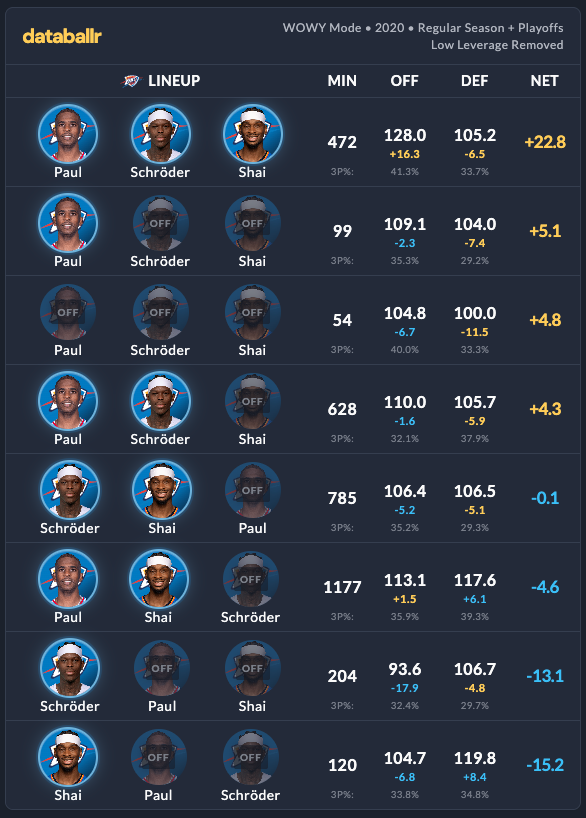
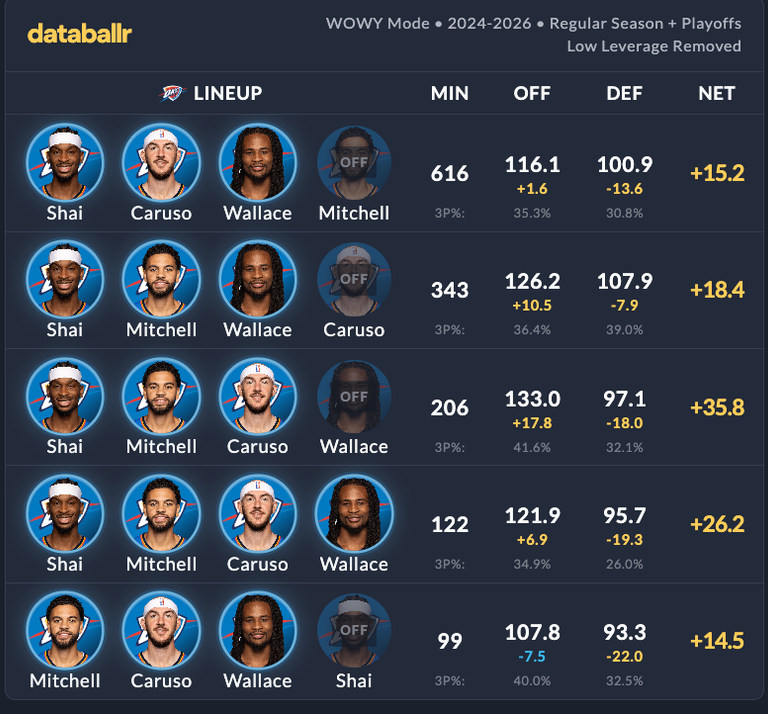
Shai Gilgeous-Alexander, Josh Giddey, Alex Caruso, Cason Wallace, Ajay Mitchell, and Nikola Topic have all proven to be, or profile as, Third Guards. The Thunder have consistently prioritized point guard skills attached to size over traditional wing archetypes. Even the only player on the roster that I consider to be in any way a wing, Jalen Williams, is an excellent dribble/pass/shoot player that has the unique ability to scale up defensively, performing admirably as a rim protector when the team’s traditional bigs are hurt. With Lu Dort in Atlanta, plus Nikola Topic, Bennett Stirtz, and Jared McCain in the fold, I expect the Thunder to experiment even more aggressively with three point guard constructions.
Dishonorable Mention: Tyrese Haliburton – Elite Point Guard ≠ Third Guard
Dishonorable is a strong word but the most interesting thing I saw when looking through the performance of recent three point guard lineups was how poor Tyrese Haliburton lineups performed. The minutes total of these lineups is small but when you extend the sample to include Haliburton as a part of all three guard lineups, the trend persists. There’s a lot of context that I could add to the below chart to hand-wave away the results, including his age, teammates, and playstyle, but I also think Haliburton’s skillset is the perfect breeding ground for Third Guard discussion.
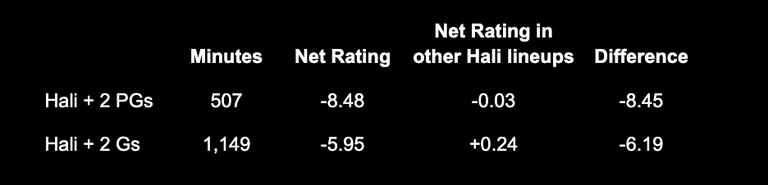
Before his Finals run, Tyrese Haliburton was the most underrated player in the NBA, and even today I don't think he gets the praise he deserves. But in many ways, he's an outlier superstar because of all the things he doesn't do. Looking at the flow chart, you'll notice that almost every highly regarded jumbo point guard appears somewhere in the Third Guard section. Haliburton is one of the few that doesn't qualify under either pathway, as he provides minimal value as a wing defender or rebounder. Many of these three point guard and three guard lineup minutes came early in Haliburton's career, when he truly was one of the worst defenders in basketball — a description that no longer fairly applies — but the larger point remains. Being a great point guard and being a great Third Guard are not one and the same. On its face, Haliburton possesses the offensive skills that would be great in three point guard lineups, but his particular strengths don't translate into the kind of wing-replacing skillset that would unlock these lineups as a Third Guard.
Footnotes
- ↩See generally, my 2026 Draft Philosophy Guide for my view on searching for outliers and how average is replaceable.
- ↩For purposes of this analysis, positions were taken from Basketball Reference. To be more inclusive and capture a better sample, a player is considered a point guard or center for a given year if Basketball Reference listed the player at the applicable position during that year or for the year before or after the given year. Ex. if Goran Dragic was listed at PG for two total seasons in his career, let’s say 14-15 and 19-20. He would then be considered a PG for three PG lineup calculations during 13-14, 14-15, 15-16, 18-19, 19-20, and 20-21 but not the 16-17 and 17-18 seasons. The same analysis applies to the “small ball”, no center lineups. By no means a perfect system but allows us to circumvent some of the issues that roster construction plays on the rigid positional classification.

Comments